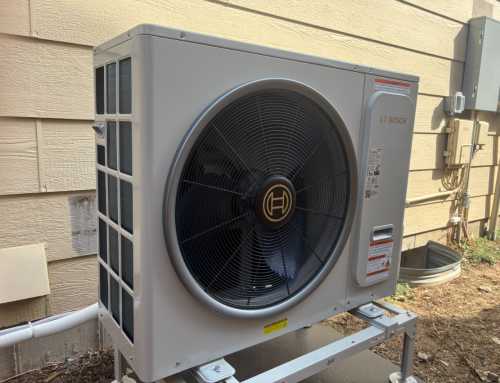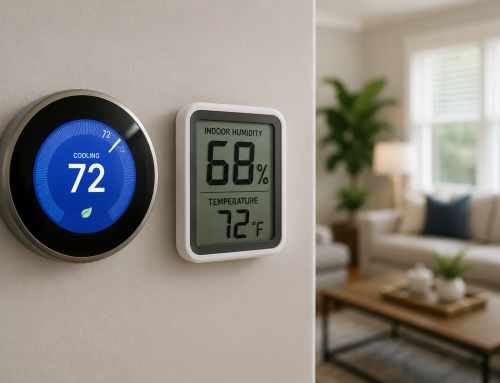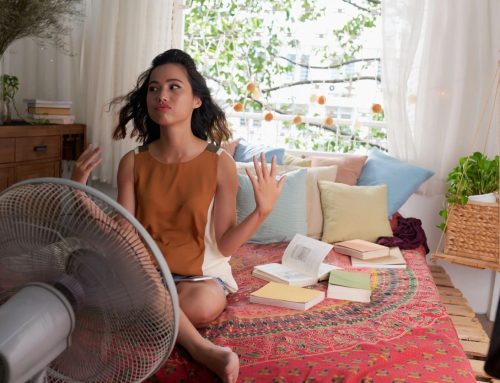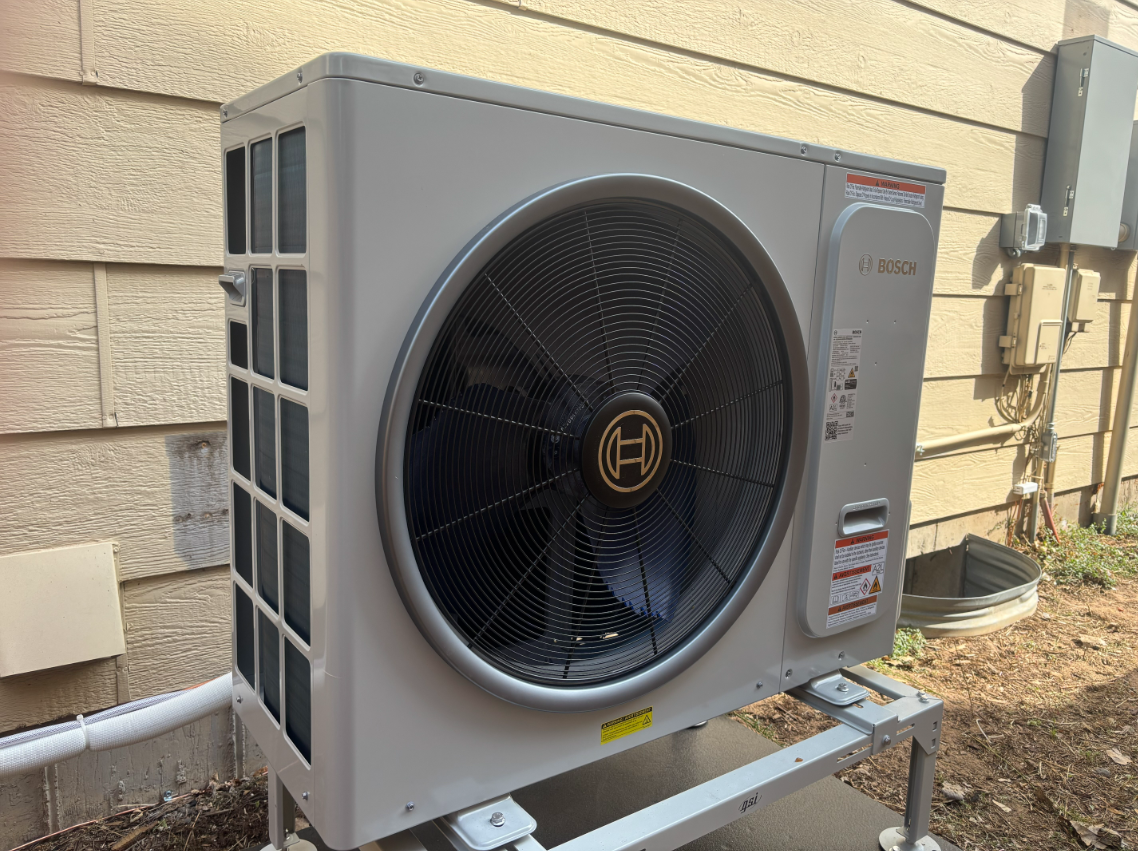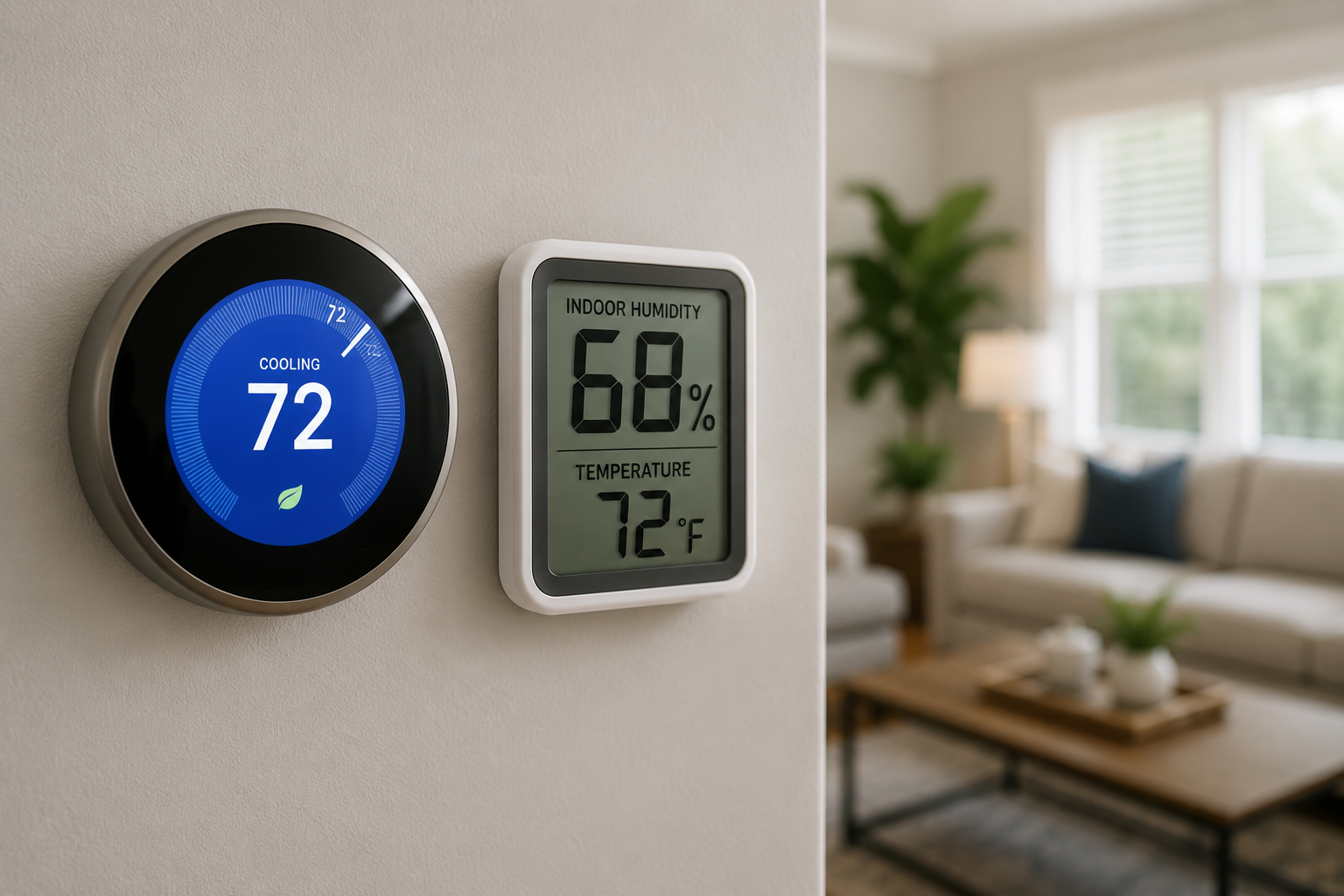
You hear the air conditioner running. The thermostat says 72 degrees. But somehow, your Decatur home still feels sticky, clammy and warmer than it should.
Sound familiar?
High indoor humidity is a common comfort problem in Georgia, particularly during late summer and early fall. Your air conditioner doesn’t just cool your home — it also removes moisture from the indoor air. When something interferes with that process, your house can feel uncomfortable even when the temperature on the thermostat looks perfectly reasonable.
So, why is your house humid when the AC is running?
The short answer is that your air conditioner may not be removing enough moisture. That can happen because of airflow problems, dirty HVAC components, equipment that’s improperly sized, short cycling or simply because Georgia’s outdoor humidity is giving the system more moisture than it can effectively handle.
Why Does Georgia Humidity Make Such a Difference?
Anyone who has spent an August or September afternoon around Decatur knows that temperature is only part of the comfort equation.
Humidity affects how quickly moisture evaporates from your skin. When there’s too much moisture in the air, you can feel hot and sticky even at a relatively comfortable indoor temperature.
That’s why lowering the thermostat isn’t always the answer.
If your house is 72 degrees but extremely humid, lowering the thermostat to 68 may just make your AC run harder without addressing the underlying problem.
What Should Indoor Humidity Be?
For most homes, maintaining indoor relative humidity somewhere around 30% to 50% is generally considered comfortable, although conditions and individual homes vary.
Once indoor humidity regularly climbs above that range, you may start noticing problems such as:
- Rooms that feel sticky or clammy
- Condensation on windows or other cool surfaces
- Musty odors
- Increased dust mite or mold concerns
- Wood doors or furnishings swelling
- AC running frequently without making the house feel comfortable
- Sleeping areas feeling unusually warm or stuffy
If you’re constantly lowering the thermostat because the house doesn’t feel cool, checking the indoor humidity level is a good place to start.
1. Your Air Conditioner May Be Too Large
It sounds backward, but a bigger air conditioner isn’t necessarily a better air conditioner.
An oversized AC system may cool your house very quickly. That sounds great until you realize the system needs adequate runtime to remove moisture from the air.
If the AC rapidly reaches the thermostat setting and shuts down, it may not operate long enough to properly dehumidify your home.
This is called short cycling, and high indoor humidity can be one of the symptoms.
Correct HVAC sizing is especially important in a hot, humid climate like Metro Atlanta.
2. Your Airflow May Be Restricted
Your HVAC system needs proper airflow to cool and dehumidify effectively.
Common airflow problems include:
- A dirty air filter
- Blocked or closed supply vents
- Dirty evaporator coils
- Ductwork restrictions
- Blower motor problems
A severely clogged filter, for example, can reduce airflow across the evaporator coil and hurt overall system performance.
Checking the filter is an easy first step homeowners can take themselves.
3. Your AC May Be Short Cycling for Another Reason
An oversized unit isn’t the only thing that causes short cycling.
Thermostat problems, electrical issues, refrigerant problems and other HVAC malfunctions can cause an air conditioner to turn on and off more frequently than it should.
Pay attention to the system.
Does your AC run for a normal period, shut off and stay off? Or does it seem to be constantly starting and stopping?
Frequent cycling deserves a closer look.
4. Outdoor Air Could Be Getting Into the House
Your HVAC equipment isn’t always the culprit.
Air leaks around windows, doors, attic penetrations and other openings can allow warm, humid Georgia air into your house.
Your AC then has to cool and dehumidify that incoming air.
Leaky ductwork can create similar problems, particularly when ducts travel through an attic or other unconditioned area.
5. Your AC May Need Maintenance or Repair
An air conditioner that isn’t operating correctly may struggle to remove humidity.
Dirty coils, refrigerant problems, drainage issues and other mechanical problems can all affect performance.
This is one reason regular HVAC maintenance matters. Problems that seem minor in spring can become much more noticeable after the system has worked through a long Georgia summer.
Do I Need a Whole-House Dehumidifier in Georgia?
Maybe.
Some Decatur homes have persistent humidity problems even when the HVAC system is operating properly.
A whole-house dehumidifier works with your HVAC system to remove excess moisture from the air and can help maintain a more consistent indoor humidity level without forcing you to continually lower the thermostat.
It’s especially worth discussing if your home frequently feels clammy, develops musty odors or consistently measures high indoor humidity.
Don’t Just Keep Turning Down the Thermostat
If your Decatur home feels sticky at 72 degrees, setting the thermostat to 68 isn’t necessarily solving the problem.
You may simply be asking the air conditioner to work harder.
Instead, figure out why the house feels humid.
The solution could be as simple as replacing a dirty filter. Or it could point to an airflow problem, equipment issue, improperly sized system or a need for better humidity control.
American Energy Heating & Air can inspect your cooling system and indoor air quality to determine what’s actually happening.
Frequently Asked Questions
Why is my house humid even though my AC is running?
Your air conditioner may not be removing enough moisture because of short cycling, poor airflow, dirty HVAC components, equipment sizing or excessive moisture entering the home.
Can an oversized AC cause high humidity?
Yes. An oversized air conditioner may cool the home so quickly that it shuts off before it has enough time to adequately remove moisture.
Will lowering my thermostat reduce humidity?
It may increase AC runtime, but continually lowering the thermostat isn’t a good substitute for identifying the cause of excessive humidity.
Can a dirty air filter make my house humid?
A badly restricted filter can reduce airflow and affect HVAC performance, including the system’s ability to cool and dehumidify effectively.
Can American Energy help with indoor humidity?
Yes. American Energy Heating & Air provides HVAC and indoor air quality services throughout Decatur and the surrounding East Atlanta area, including humidity-control solutions.