If you’ve ever walked into your home during a hot Georgia summer only to feel sticky, clammy, or uncomfortable—even though your air conditioner is running, you aren’t alone. High indoor humidity is one of the most common complaints we hear from homeowners in Decatur and throughout Metro Atlanta.
Your air conditioner is designed to cool your home and remove excess moisture from the air. When humidity levels remain high, it’s often a sign that something isn’t working as efficiently as it should. Fortunately, many humidity problems can be diagnosed and corrected before they lead to larger HVAC issues.
At American Energy Heating & Air, we help homeowners enjoy cooler, drier, and healthier indoor air all summer long.
Why Humidity Matters
Humidity affects far more than comfort.
When indoor moisture levels climb too high, you may notice:
- Sticky or clammy skin indoors
- Difficulty sleeping
- Musty odors
- Condensation on windows
- Mold or mildew growth
- Warped wood flooring or furniture
- Increased allergy symptoms
- Your home feels warmer than the thermostat reading
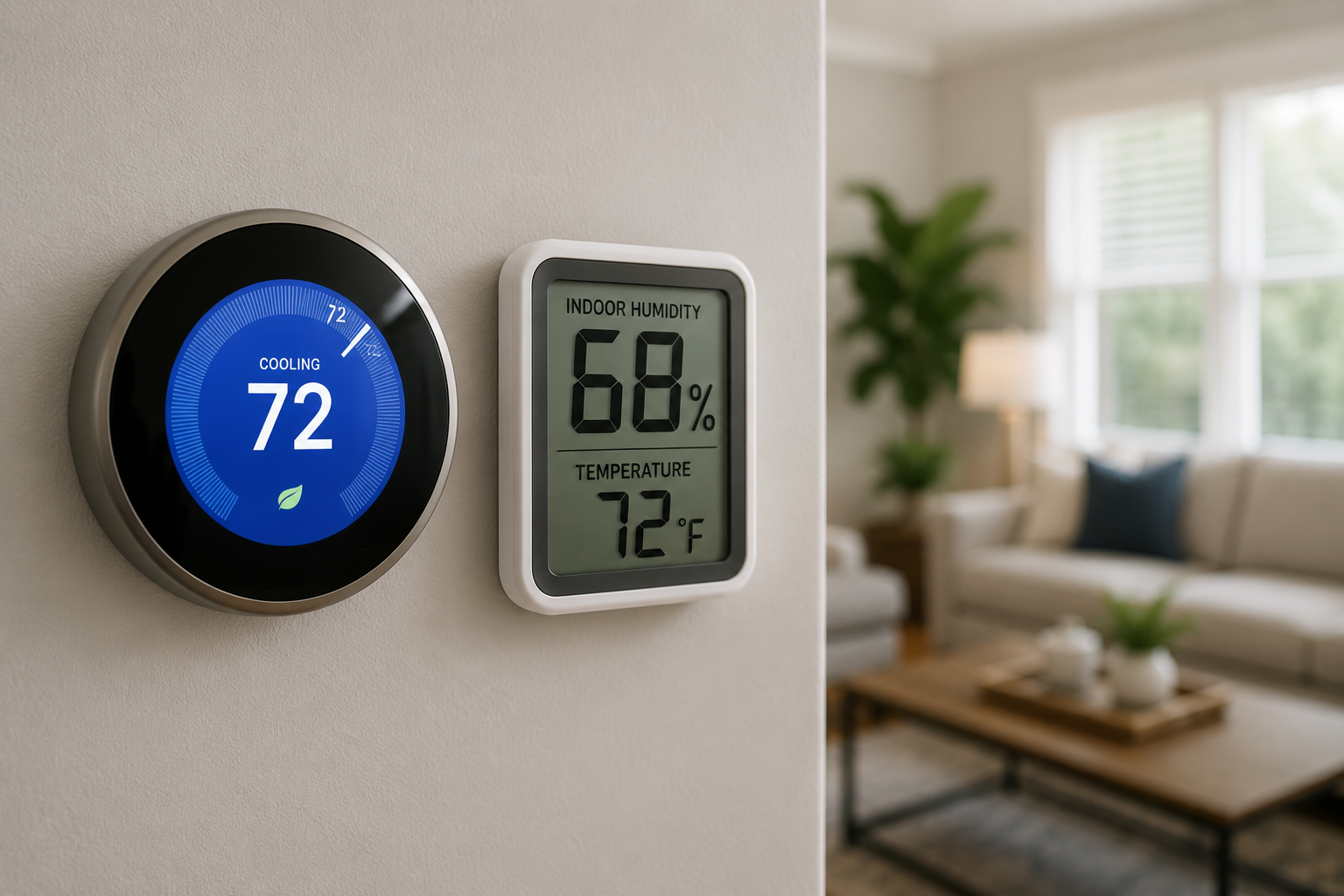
Even if your thermostat says 72°, high humidity can make your home feel several degrees warmer.
What Is the Ideal Indoor Humidity Level?
For most homes, indoor humidity should stay between 40% and 55% during the summer.
In Georgia, outdoor humidity often exceeds 70% or even 80%. Your HVAC system works hard to remove that moisture before it circulates throughout your home.
If indoor humidity consistently climbs above 60%, it’s time to determine why.
Your Air Conditioner May Be Oversized
Believe it or not, a larger air conditioner isn’t always better.
If your system is oversized, it cools the home very quickly and shuts off before it has enough time to remove moisture from the air.
This short cycling leaves your home cool—but still humid.
Proper system sizing is one of the most important factors in maintaining indoor comfort.
Dirty Air Filters Restrict Airflow
A clogged air filter limits airflow across the evaporator coil.
When airflow is restricted:
- Cooling efficiency drops
- Moisture removal decreases
- Energy bills increase
- Your system works harder
Replacing your air filter regularly is one of the easiest ways to improve both comfort and HVAC performance.
Dirty Evaporator Coils Reduce Moisture Removal
Inside your indoor unit, the evaporator coil removes both heat and humidity.
Over time, dust and debris can coat the coil, making it less effective at pulling moisture from the air.
Professional cleaning restores efficiency and helps your system better control indoor humidity.
Low Refrigerant Can Affect Humidity Control
Low refrigerant doesn’t just reduce cooling—it also affects your air conditioner’s ability to remove moisture.
Common warning signs include:
- Longer cooling cycles
- Warm air from vents
- Ice on refrigerant lines
- Higher energy bills
- Increased indoor humidity
Only a licensed HVAC technician should diagnose and repair refrigerant issues.
Leaky Ductwork Lets Humid Air Inside
Many homes lose conditioned air through gaps or leaks in the duct system.
Those same leaks can also pull warm, humid attic or crawlspace air into your home.
The result?
Your air conditioner works harder while humidity continues to rise.
Professional duct inspections can often uncover hidden airflow problems that impact comfort year-round.
Your Thermostat May Be Working Against You
Many homeowners use the “On” fan setting without realizing it can increase humidity.
When the fan runs continuously, it can blow moisture that collected on the evaporator coil back into the home after the compressor shuts off.
For most households, the Auto setting provides better humidity control because the fan only runs while the system is actively cooling.
You May Need a Whole-Home Dehumidifier
Some Georgia homes naturally struggle with humidity because of:
- Older construction
- Large crawl spaces
- Air leaks
- Heavy tree cover
- Frequent summer rainfall
A whole-home dehumidifier works alongside your HVAC system to remove excess moisture without overcooling your home.
Benefits include:
- Improved comfort
- Better indoor air quality
- Less mold and mildew
- Reduced musty odors
- Lower strain on your AC
- Potential energy savings
For many homeowners, it’s one of the best upgrades for year-round comfort.
How Humidity Impacts Indoor Air Quality
Excess humidity creates an ideal environment for:
- Mold spores
- Dust mites
- Mildew
- Bacteria
Lowering indoor humidity can improve indoor air quality and may reduce allergy and asthma triggers for many families.
Maintaining proper humidity levels helps create a healthier living environment while making your home feel noticeably more comfortable.
How American Energy Heating & Air Can Help
If your home always feels damp or sticky, simply lowering the thermostat isn’t the answer.
Our experienced technicians can evaluate your entire HVAC system to identify what’s causing the excess humidity. We inspect airflow, refrigerant levels, evaporator coils, ductwork, thermostat settings, and overall system performance to recommend the most effective solution.
Whether you need routine maintenance, AC repairs, duct improvements, or a whole-home dehumidifier, we’ll help restore the comfort your family deserves.
Stay Comfortable Through Georgia’s Humid Summers
Summer humidity is a fact of life in Decatur—but your home shouldn’t feel like the outdoors.
If your air conditioner is running constantly yet your home still feels muggy, American Energy Heating & Air is here to help. We’ll diagnose the source of the problem and recommend practical, long-lasting solutions that improve comfort, efficiency, and indoor air quality.
Don’t spend another summer feeling sticky indoors. Contact our team today to schedule an HVAC inspection and enjoy a cooler, drier home.
Frequently Asked Questions
Why does my house feel sticky even when the AC is on?
Your air conditioner may not be removing enough moisture due to dirty filters, low refrigerant, restricted airflow, an oversized system, or duct leaks.
What humidity level should my home be during the summer?
Most experts recommend keeping indoor humidity between 40% and 55% for the best balance of comfort, efficiency, and indoor air quality.
Can a dirty air filter cause high humidity?
Yes. A clogged filter restricts airflow, making it harder for your air conditioner to remove moisture from the air effectively.
Should I leave my thermostat fan set to “On”?
Generally, no. The Auto setting typically provides better humidity control because the fan only runs during active cooling cycles.
Will a whole-home dehumidifier lower my energy bills?
It can. Because drier air feels cooler, many homeowners can maintain the same level of comfort while setting their thermostat a degree or two higher, helping reduce overall cooling costs.